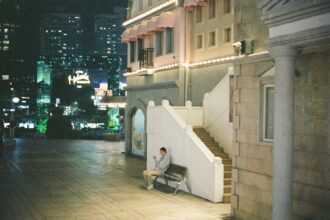







Quiet spaces begin long before the door closes against the traffic on Broad Street. They start in the sudden drop of sound when stone walls intercept the bicycle tires, when limestone facades swallow the low rumble of a delivery van, and when the air itself seems to thicken with centuries of concentrated thought. Outside, a courier shouts into a mobile phone near the Radcliffe Camera. Inside the archway, the world does not vanish, but it recedes. It becomes a painting viewed from across a wide, empty room.
We chase silence as if it were a rare mineral or a luxury commodity sold in discreet bottles. Yet true stillness is rarely about the absence of noise. It is about a structural shift in how attention behaves. Modern urban life scatters our focus across a dozen trivial tabs, notifications, and sirens. Against this permanent friction, physical quiet acts as a counterweight. It offers the mind permission to settle, to stop scanning the horizon for the next interruption, and to inhabit a single minute without immediate demands.
The Architecture of Retreat

Cities are built for speed, but they also harbor pockets designed for deceleration. In Oxford, these retreats are woven directly into the daily rhythms of the town. You find them tucked behind heavy wooden doors, down narrow alleyways, and beneath vaulted ceilings that have absorbed the murmurs of generations. When exploring Oxford walking routes and the culture of observation, pedestrians quickly learn that the most revealing parts of the urban landscape are often the quietest. A courtyard behind a college chapel or a shaded bench near a sunken garden provides more than physical rest; it provides a distinct spatial atmosphere.
Silence in these settings is physical, tangible even. Dust motes hang motionless in slanting afternoon shafts of light. The creak of an old floorboard carries across a room not as a distraction, but as a reminder of scale. These are environments that demand very little from us. They do not ask us to perform, buy, or reply. They simply hold space.
Libraries and the Sanctuary of Study
Among all urban refuges, libraries hold a singular authority over our attention. To sit at a long oak table beneath high windows is to enter a silent social contract with strangers. Nobody is watching, yet everyone is engaged in the same quiet rebellion against haste. Students seeking out silent study spaces know this environment intimately. The collective energy of focused minds creates an invisible shield against wandering thoughts.
This atmosphere is entirely different from isolation. Working alone in an empty apartment can sometimes amplify mental noise. A shared library, by contrast, relies on a chorus of unspoken discipline. The rustle of a turning page or the scratch of a fountain pen becomes a reassuring heartbeat.
What Makes a Space Feel Quiet?
Not every silent room feels restful, and not every bustling room is loud. A space achieves genuine tranquility through specific sensory and structural qualities that allow the nervous system to downshift.
- Muted acoustics that absorb harsh high frequencies and echo.
- Subdued natural light rather than harsh overhead glare.
- Uncluttered sightlines that prevent visual fatigue.
- A sense of predictable boundaries and secure enclosure.
- Absence of transactional pressure or commercial clutter.
Gardens and Green Sanctuaries
Beyond stone walls, quiet takes root in soil and leaves. Botanical gardens and hidden quadrangles offer a different register of calm. Here, the background hum is organic—the rustle of sycamore leaves, the distant chime of a quarter-hour bell, the heavy drop of rain on damp turf.
Nature does not demand intellectual labor. It asks only for sensory presence. Watching light move across a lawn or tracing the rough bark of an ancient beech tree anchors the wandering mind in the immediate present. These green spaces remind us that thought requires seasonal rest just as much as continuous cultivation.
Churches and Secular Havens
Religious buildings have long mastered the geometry of awe. Even for the secular visitor, stepping into a medieval church or college chapel triggers an instinctive lowering of the voice. The height of the ceiling lifts the eye upward, breaking the horizontal gaze of screen-weary eyes.
Alongside churches, certain independent cafes and museums function as modern secular havens. As explored in discussions on Oxford independent cafes and the social life of reading, urban corners where people gather simply to read or watch the street through steamed glass provide a vital community anchor. They offer warmth and low-level human activity without demanding conversation.
The Return to the Street
The true test of a quiet space is what happens when you leave it. Stepping back out onto the cobbled pavement after an hour in a hushed archive or shaded courtyard, the city feels momentarily intensified. The bicycle bells sound sharper, the bus engines deeper, the pedestrians more vivid.
Yet the internal state has shifted. The noise is still there, but it no longer rushes in to fill every available corner of the mind. The quiet did not erase the city; it gave us a vantage point from which to watch it pass by once more.