






Gallery visiting often begins with a familiar briskness. A visitor enters a room, scans the walls, checks the accompanying placard for the artist’s name and date, and moves on within seconds. This rapid pace has become the default rhythm of modern exhibition spaces. People navigate collections as if clearing a mental checklist, treating visual art like text to be skimmed rather than an environment to inhabit. Yet paintings and sculptures do not yield their qualities immediately. They wait quietly behind frames and plinths, indifferent to the hurried footsteps of museumgoers. Slowing down changes the entire dynamic between viewer and object, transforming a fleeting glance into an active encounter.
When approaching a canvas, the initial sweep of the eye takes in the entire composition at once. This first impression registers scale, palette, and overall mood before the rational mind begins categorizing the imagery. For those exploring major cultural repositories like the National Gallery, this initial encounter sets the stage for how thousands of visitors interact with historical and contemporary works daily. Standing before a painting without reading the label first allows the sensory data to arrive unmediated by biographical facts or historical timelines. The blue of a sky or the heavy shadow in a corner strikes the retina directly, free from contextual baggage. This immediate, pre-reflective stage establishes a physical relationship with the surface, grounding the viewer in the simple reality that an object exists across the room from them.
The Shift Toward Micro-Details

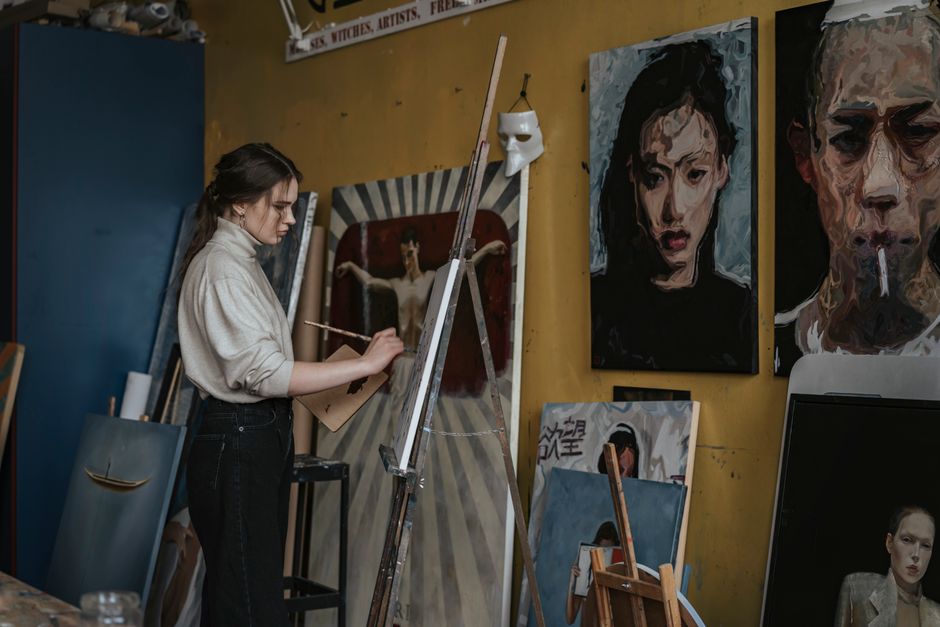
After the initial overview settles, the eye naturally seeks out smaller fragments within the larger frame. A slow approach reveals the physical texture of the medium—the raised ridge of dried oil paint, the delicate weave of canvas showing beneath a thin wash, or the accidental fingerprint left by an artist centuries ago. These micro-details anchor the work in human labor rather than mere optical illusion. When visitors move past the subject matter to examine brushwork, they witness the physical decisions made by the creator. A single stroke that looked smooth from a distance turns out to be a chaotic tangle of contrasting hues. Discovering these hidden complexities rewards patience, turning a static image into a record of movement and time.
Observing these textures often reveals how art galleries fit into Oxford’s cultural life by offering quiet spaces for contemplation amid the rush of academic terms and city traffic. In these rooms, looking closely at material reality becomes an antidote to screen fatigue. To engage deeply with a surface, consider trying three small observational steps:
- Trace the outer boundary of the main shape with your eyes without blinking.
- Locate a patch of shadow and name three distinct colors hidden inside it.
- Step back until the brushstrokes blur into light, then step forward until only the texture remains.
These micro-exercises disrupt automatic viewing habits and force the eye to register what is actually on the wall rather than what the brain expects to see.
Adjusting Distance and Perspective
Physical positioning dictates how a painting speaks to its audience. Most visitors stand at a rigid, polite distance—roughly two steps back from the frame, keeping arms-length away from the invisible barrier. Changing this distance completely alters the experience. Stepping all the way back to the opposite wall allows the composition to cohere into a unified whole, revealing balance, mass, and structural weight. Moving in close until the frame nearly fills the field of vision obscures the subject entirely, turning the artwork into an abstract field of pure color and texture. Both extremes offer valid insights, reminding the viewer that a painting is simultaneously an illusionistic window and a flat, painted object.
This oscillation between distance and proximity mirrors how people engage with physical surroundings in historic environments, much like discovering how Oxford’s buildings hold memory through stone, mortar, and wear. Architecture and painting both demand a physical choreography from the observer. Moving through a gallery requires an active negotiation of space, shifting weight from one foot to the other, leaning in, stepping back, and allowing the body to participate in the act of seeing.
Allowing Context to Enter Late
Once the eyes have wandered across the surface and tested various distances, the intellectual context can finally enter the equation. Reading the wall label or exhibition text at this later stage shifts the viewing experience from pure perception to active dialogue. Instead of using the text as a crib sheet to decode the image, the viewer uses the historical date, title, or provenance to test what they have already discovered independently. If the label reveals that a sombre landscape was painted during a time of personal crisis, that information does not dictate the emotional tone; rather, it corroborates the heavy, churning brushstrokes observed moments earlier. Context becomes a companion to looking rather than a substitute for it.
This balanced approach helps demystify exhibitions, aligning with broader efforts in modern art without the intimidation that encourage personal agency over academic compliance. Visitors do not need a degree in art history to stand before a canvas and form a genuine connection. They only need the willingness to let perception precede analysis. When history and theory arrive late in the process, they illuminate what is already visible rather than telling the viewer what they ought to feel.
The Value of the Return
The final stage of slow looking occurs when the visitor prepares to leave the room. Turning back for one last glance before exiting often brings a surprising clarity. Works that initially appeared confusing or dull suddenly resolve into focus when seen from the doorway. This parting look acts as a summary, locking the experience into memory not as a set of facts, but as a lingering visual impression. There is no correct amount of time to spend in front of a piece; a single uninterrupted minute can outweigh an hour of distracted wandering if the attention is absolute.
Leaving the gallery does not mean the viewing process is complete. Often, walking back out into the open air brings a heightened sensitivity to light falling across a courtyard or shadows stretching across a pavement. The eye, newly trained by prolonged looking at painted surfaces, begins to notice subtle gradations in the everyday world. If one leaves the exhibition with a single unresolved detail echoing in the mind—a strange shade of green, an ambiguous facial expression, or a rough patch of impasto—the visit has succeeded. Art does not require immediate resolution to leave its mark; sometimes, carrying an unanswered question into the rest of the day is the most enduring gift an image can offer.