




Public Philosophy and Everyday Questions brings abstract ethical thought out of university libraries and into our daily routines, ordinary choices, and public debates. For many people, philosophy feels like an isolated academic discipline filled with dense texts and obscure terminology. Yet, at its core, this field of inquiry is simply the art of asking better questions about how we live together, what we value, and how we navigate modern life. When we discuss what constitutes a fair workplace, how to balance personal freedom with community responsibility, or what obligations we hold toward future generations, we are already engaging in philosophical reasoning.
Engaging with fundamental ideas does not require a formal seminar room or a specialized degree. It happens naturally in public spaces, university lectures, and lively debates that shape our cultural landscape. Much like exploring the rich intellectual traditions found at an Oxford ideas festival, everyday philosophical reflection invites us to step back from our immediate impulses and examine the underlying assumptions of our culture. It encourages us to test our beliefs against competing viewpoints and to listen with genuine curiosity.
Consider how often we make decisions based on unexamined habits. Whether we are choosing how to spend our leisure time, deciding what kind of consumer to be, or evaluating news stories and political arguments, our choices are guided by implicit ethical frameworks. Bringing these frameworks to the surface is the primary task of reflective habits in modern society. Instead of accepting conventional norms without question, citizens who practice active inquiry learn to ask why things are structured the way they are and how they might be improved.
How Ordinary Choices Reveal Deeper Values
Every choice we make reflects an underlying set of priorities. When we decide how to allocate our scarce time between work, rest, and community engagement, we are making an ethical statement about what makes a good life. These micro-decisions add up to form our personal character and influence the collective character of our neighborhoods and institutions.
- Evaluating how we spend money and which businesses we support.
- Determining our responsibilities to neighbors and local community groups.
- Balancing digital connectivity with quiet solitude and reflection.
- Deciding how to respond to disagreements with colleagues or friends.
These scenarios demonstrate that ethical inquiry is not reserved for grand historical moments. It thrives in the ordinary texture of daily life, where small choices accumulate into meaningful patterns. For further exploration of how abstract principles show up in daily routines, you can read about philosophy in everyday life.
The Role of Public Debate in Civic Life
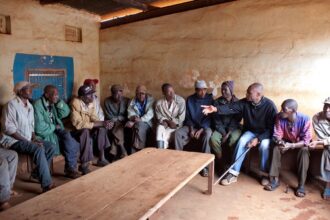
Healthy societies depend on open dialogue where citizens can disagree constructively. However, modern public discourse often favors quick slogans and polarized reactions over nuanced understanding. This is where deliberate intellectual engagement becomes vital. When public discussions are grounded in careful reasoning and mutual respect, they transform from shouting matches into genuine exchanges of ideas.
Participating in civic life requires us to tolerate ambiguity and acknowledge the complexity of social problems. No single perspective holds a monopoly on wisdom. By welcoming diverse viewpoints and examining issues through multiple ethical lenses, we strengthen our communities and make better collective decisions.
Cultivating Reflective Habits
Developing a thoughtful approach to life is a continuous practice rather than a one-time achievement. It involves carving out moments of stillness in a busy schedule, reading widely, and remaining open to having one’s mind changed. These habits enrich our personal experiences and deepen our connection to the intellectual traditions that have shaped human culture for centuries.
Ultimately, engaging with big questions makes our days more intentional and our public conversations more humane. By embracing this mindset, we discover that the most profound insights are often hidden in plain sight, waiting behind the ordinary questions we ask every day.
References
- Sandel, Michael J. (2020) “The Tyranny of Merit: What’s Become of the Common Good?” Farrar, Straus and Giroux.
- Nussbaum, Martha C. (2010) “Not for Profit: Why Democracy Needs the Humanities.” Princeton University Press.
- Appiah, Kwame Anthony (2008) “Experiments in Ethics.” Harvard University Press.