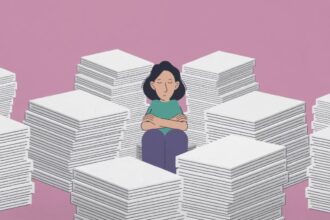






There is a point at which a busy term stops feeling merely busy. Reading piles up, deadlines overlap, sleep becomes negotiable and even ordinary tasks begin to feel heavier than they should.
That experience is often described as burnout, although the term is used loosely in everyday conversation. It is useful to be careful here. Persistent exhaustion, low mood or anxiety can have many causes, and a general article cannot diagnose them. What it can do is look at the academic conditions that make sustained pressure harder to manage.
Pressure Builds Through Accumulation

One difficult essay rarely explains the whole problem. More often, strain comes from several demands arriving at once: coursework, paid work, applications, social obligations, commuting, financial pressure and the quiet fear of falling behind.
Universities also create comparison. Libraries stay full late. Somebody always appears more organised. Productivity becomes visible in ways that rest does not. That can make an ordinary tired day feel like evidence of failure.
Rest Is Not a Prize for Finishing Everything
Academic work has no natural endpoint. There is always another article to read or paragraph to improve. Waiting until everything is finished before resting is therefore a poor bargain.
This does not mean that better scheduling solves every problem. Sometimes the workload itself is unreasonable. Sometimes money, health, caring responsibilities or housing are part of the pressure. Treating every difficulty as a personal time-management failure only adds another demand.
Institutions Shape the Experience Too
Clear deadlines, realistic expectations, accessible teaching and sensible assessment design all affect how pressure is experienced. So does whether students know where to ask for help before a problem becomes acute.
The University of Oxford’s student welfare information brings together support routes available within the university. Similar support structures matter because academic pressure is not always something a student can solve alone.
Not Every Difficult Week Is Burnout
Some periods of study are simply demanding. The more useful distinction is whether the pressure is temporary and recoverable, or whether exhaustion has begun to dominate everyday life.
Academic culture works better when it leaves room for that distinction. Studying seriously should require effort. It should not require pretending that human limits do not exist.