





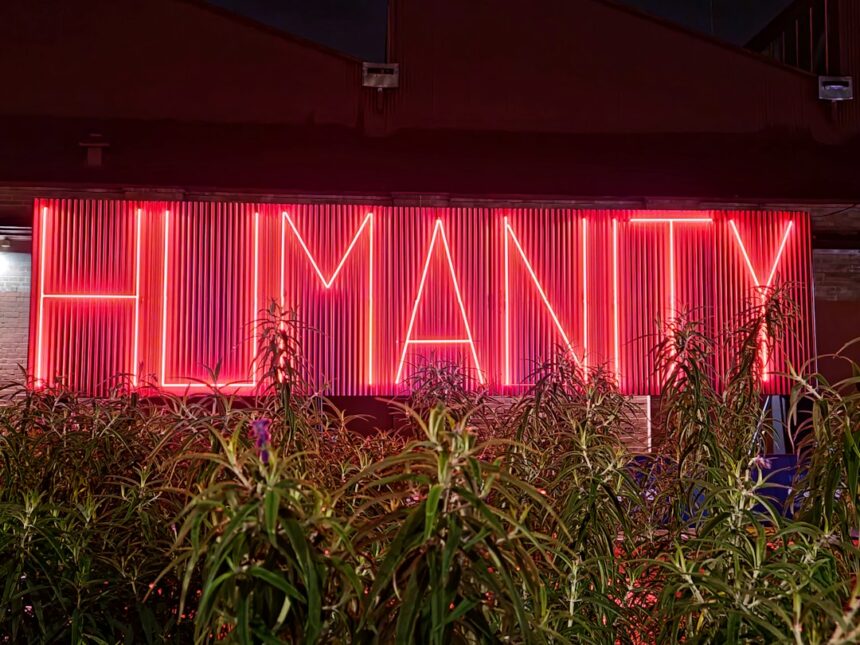
Humanities Today is rarely discussed without an undercurrent of defensive anxiety. Every few months, another opinion piece questions the market value of a literature degree, the immediate utility of historical research, or the budget allocated to philosophy departments. Yet this constant hand-wringing often misses the point entirely. Literature, history, philosophy, and the arts do not exist to justify their existence on corporate balance sheets or to serve as luxury items for the intellectually privileged. Instead, they operate as everyday instruments for navigating a complicated world. When we ask what these disciplines are for, we should look past institutional survival and examine what they actually help people notice, question, and debate in public life.
People often assume that studying the past or reading old texts is an escape from modern pressures. In reality, it is a direct confrontation with them. The everyday landscape is filled with automated choices, rapid communication, and algorithms designed to capture attention by eliminating nuance. Engaging with cultural texts and historical analysis acts as a deliberate brake on this momentum. Just as critical thinking is mostly about slowing down, the humanistic disciplines encourage a deliberate pause before reacting to the loudest voice in the room. They ask us to linger with a difficult sentence, a contradictory motive, or an ambiguous painting long enough to understand that human experience rarely fits into neat binary categories.
The Art of Interpretation in a Cluttered Information Landscape
Interpretation is the foundational engine of the humanities. Every day, modern citizens are bombarded with data streams, corporate statements, political messaging, and statistical claims that pretend to be self-evident. The training provided by literature and art criticism teaches people to look beneath the surface of a message. It asks who is speaking, what assumptions remain unstated, and what metaphors are doing the heavy lifting in a persuasive speech. This is not about finding a single hidden meaning in a poem or a novel. It is about developing a resilient skepticism toward simple narratives.
When an individual reads a complex piece of prose or analyzes a historical document, they practice the art of reading between the lines without falling into cynical paranoia. They learn that texts are constructed objects, shaped by the time, place, and biases of their makers. In public life, this interpretive habit prevents people from taking political rhetoric or media narratives at face value. Organizations such as the British Academy routinely emphasize how these analytical skills underpin a healthy society by fostering informed public debate. Without interpretation, information remains just noise. With it, citizens can trace the lineage of an idea and evaluate its true weight.
Historical Perspective as an Antidote to Presentism
Another vital function of these disciplines is the provision of historical perspective. Modern culture suffers from intense presentism, the unexamined belief that our current moment is entirely unprecedented and that previous generations have nothing to teach us about technology, polarization, or social anxiety. History steps in to disrupt this comforting arrogance. By studying past crises, institutional failures, and cultural transformations, readers discover that contemporary dilemmas are rarely as novel as media outlets claim.
This perspective does not mean history repeats itself in predictable cycles. Rather, it reveals that human beings have repeatedly faced periods of intense disruption, shifting media ecosystems, and profound moral confusion. Looking backward helps us see the scaffolding of our current institutions, showing us that laws, social norms, and economic systems were built by people and can therefore be reimagined by people. When historical context is discarded, every minor disagreement feels like an existential apocalypse. When historical perspective is maintained, society gains the emotional and intellectual room required to address structural problems with patience and strategic clarity.
Language, Nuance, and the Management of Disagreement
Public discourse today often resembles a stadium sport where the goal is to defeat an opponent rather than clarify an issue. The humanities offer a laboratory for exploring language and managing disagreement. Philosophy and literature do not promise universal harmony or easy consensus. Instead, they provide a vocabulary for articulating complex moral and political positions without resorting to slogans. They teach students and readers how to draw fine distinctions, recognize logical fallacies, and acknowledge the internal coherence of an opposing argument even while rejecting its conclusions.
Language is the primary tool of democracy, and when that tool is degraded into tribal signaling, public trust collapses. Engaging with rigorous texts forces an individual to confront ideas that challenge their core beliefs. This process mirrors how philosophy begins with ordinary questions about fairness, truth, and duty, expanding outward into rigorous public dialogue. By wrestling with difficult authors and historical debates, citizens learn that disagreement is not a sign of moral corruption but an inevitable feature of pluralistic societies. The goal is not to eliminate friction, but to learn how to argue without destroying the shared spaces that make collective life possible.
Cultural Memory and the Preservation of Shared Stories
The fourth major function is the maintenance of cultural memory. Societies are defined as much by what they choose to remember as by what they choose to forget. Monuments, museums, archives, and literary canons form a society’s collective memory, providing a repository of stories, traumas, achievements, and warnings. Without this memory, a community suffers from a form of cultural amnesia, drifting from one trend to the next without any sense of continuity or collective identity.
Cultural memory is not about blind patriotism or romanticizing the past. A robust cultural memory includes the dark chapters, the marginalized voices, and the systemic injustices that earlier generations preferred to sweep under the rug. By keeping these complex narratives alive, the humanities ensure that communities can engage in honest self-reflection. They remind us that our current cultural achievements rest on the labor, thoughts, and sacrifices of those who came before us. This connection across generations fosters a deep sense of responsibility to those who will follow.
Addressing Concerns About Relevance and Employability
Despite these clear functions, skepticism persists regarding the practical value of these fields in a competitive global economy. Critics frequently ask why students should invest time and tuition in subjects that do not lead directly to a specific technical profession. This is a legitimate anxiety in an era of high living costs and precarious employment markets. Parents and policymakers worry that focusing on art history or literary theory leaves young people unequipped for the realities of the modern workplace.
However, framing education purely as immediate job training misunderstands both the economy and human development. Technical skills have a notoriously short shelf life; software becomes obsolete, industries restructure, and automation alters job descriptions overnight. What remains durable are transferable cognitive abilities: the capacity to synthesize large amounts of qualitative information, write clearly, communicate persuasively across cultural divides, and adapt to ambiguous situations. Employers in technology, finance, public administration, and law consistently report that they value candidates who can think creatively and communicate effectively. The humanities do not offer a vocational instruction manual, but they cultivate the mental agility required to navigate an unpredictable career path.
Furthermore, institutional insularity has sometimes harmed these disciplines. When academic departments retreat into hyper-specialized jargon and write exclusively for a tiny circle of peers, they alienate the very public they should be serving. Reconnecting the humanities with public life requires scholars, writers, and educators to step outside the lecture hall and engage in accessible, rigorous conversations with broader audiences. The value of these subjects becomes self-evident when they address the real questions people are already asking about ethics, technology, and identity.
Ultimately, the humanities do not offer a magical formula to save democracy, cure social ills, or guarantee individual happiness. To claim otherwise is to burden these disciplines with a messianic role they were never designed to play. What they actually provide is far more modest and far more necessary: a set of habits, texts, and perspectives that make human life more intelligible. By refining our ability to interpret messages, offering historical depth, teaching us how to disagree constructively, and preserving the richness of cultural memory, these fields help us inhabit the present moment with greater awareness, humility, and grace.
References
The British Academy. (2023). “The Public Role of Humanities and Social Sciences in Contemporary Society.” Available at: https://www.thebritishacademy.ac.uk/
Oxford Social. (2024). “Critical Thinking Is Mostly About Slowing Down.” Available at: https://oxfordsocial.co.uk/critical-thinking-is-mostly-about-slowing-down/
Oxford Social. (2024). “Philosophy Begins With Ordinary Questions.” Available at: https://oxfordsocial.co.uk/philosophy-begins-with-ordinary-questions/