





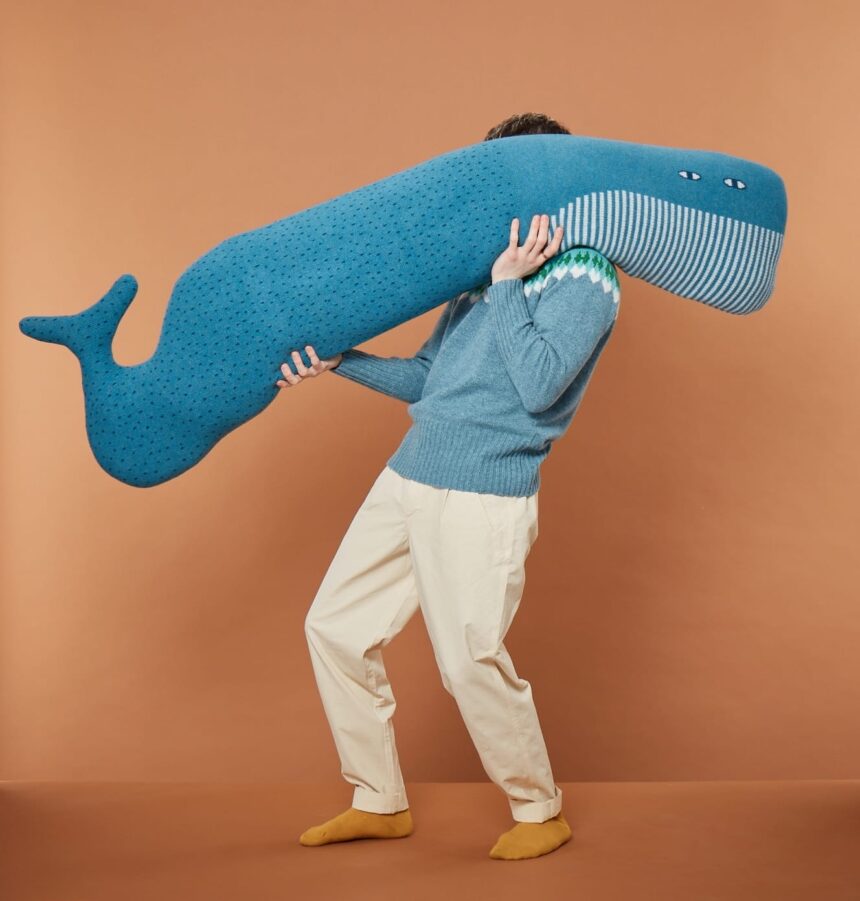
Donna Wilson’s textiles are easy to recognise because they refuse to behave like anonymous household objects. A cushion may have a face. A knitted form may look closer to a character than a piece of furnishing. The appeal is not simply decorative. Her work asks why domestic design should always be restrained, tasteful and quiet.
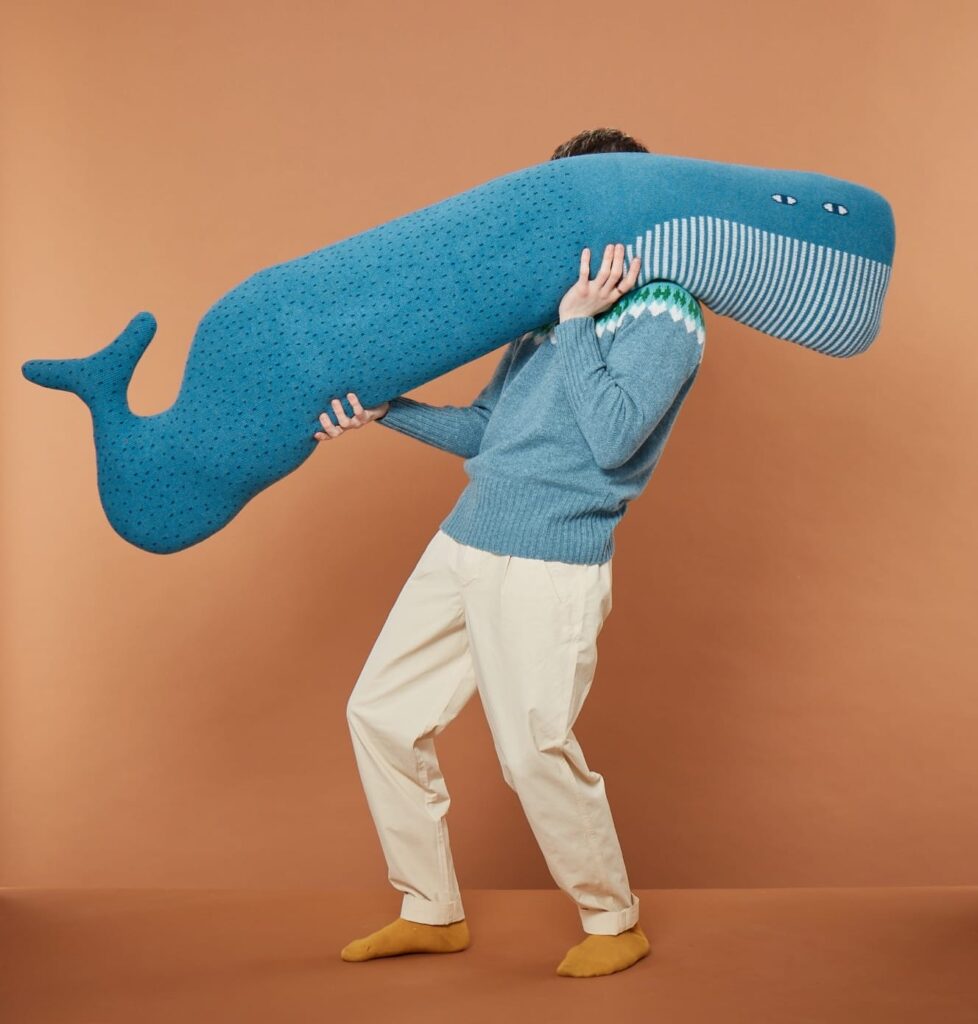
When an Object Has a Personality
Wilson’s work often sits somewhere between craft, illustration and product design. That ambiguity is part of the charm. A useful object can also be funny, odd or slightly theatrical. It does not need to disappear politely into a room.
This is also what separates playful design from novelty for novelty’s sake. The strongest pieces still depend on colour, proportion, material and workmanship. Humour works because the object itself has been carefully made.
Craft in a Mass-Produced World
Knitting and textile work carry visible traces of process. Texture matters. So do seams, fibres and small irregularities. In a market filled with smooth, repeatable products, those details make an object feel specific rather than interchangeable.
That does not mean handmade or craft-led design is automatically more authentic. It does mean the process remains visible, and that visibility changes how people relate to an object.
Why Playfulness Matters
Homes are often discussed through function, resale value or aesthetic coherence. Playful design introduces another criterion: affection. People sometimes keep an object because it makes them smile, because it feels eccentric, or because it refuses to look like everything else around it.
That is a modest claim for design. But perhaps a useful one. Not every object needs to be serious to deserve attention.