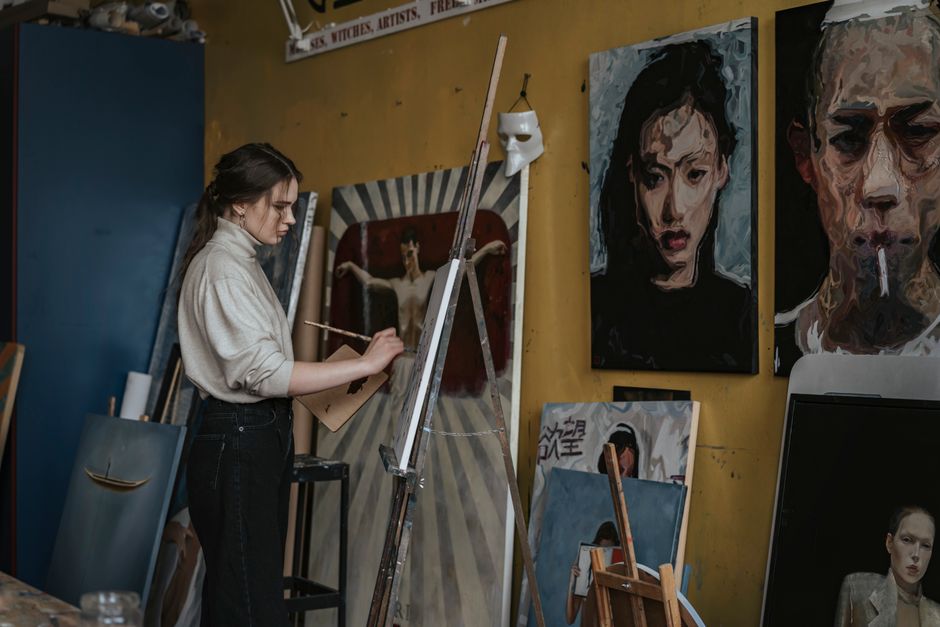







Creative confidence is often treated as something people need before they begin. In practice, it can develop through repeated work: drafting, revising, making mistakes and gradually learning what works. Waiting to feel completely confident can make it harder to start.
Confidence Does Not Have to Come First

Creative work rarely begins in a state of certainty. Writers produce rough drafts, artists test ideas and researchers revise arguments as they learn more. The early stages can feel awkward, but that does not mean the work is failing.
Action Builds Familiarity
Regular practice can change how people see themselves. Someone who writes regularly becomes more familiar with the process of drafting and editing; someone who repeatedly experiments with a medium becomes more comfortable with its limitations. Confidence can follow that familiarity rather than needing to precede it.
The Value of Ordinary Practice
- Make imperfect first drafts rather than waiting for a perfect idea.
- Review finished work and identify what can be improved.
- Allow time for experimentation without demanding an immediate result.
- Keep practising even when early attempts feel uncertain.
Creative work does not need to be efficient or constantly productive to be worthwhile. Small, unfinished or experimental projects can still provide useful experience. The important step is to participate in the work rather than making confidence a condition for starting it.