




University museums occupy a distinct space in the cultural landscape, functioning simultaneously as active laboratories, seminar rooms, and civic galleries. Consider a single mid-seventeenth-century astrolabe held within an academic collection. To a visiting researcher, the instrument is a precise historical data point, revealing manufacturing tolerances and computational shifts across trade routes. To an undergraduate student in an history of science seminar, that same brass plate becomes a physical proof of how medieval scholars visualized celestial mechanics without modern equations. To a general visitor stepping in from the autumn street, it is an arresting work of craftsmanship that anchors human history in tangible materials. These varied encounters reveal that university museums do not simply preserve static artifacts. Instead, they act as dynamic intersections where academic inquiry, formal pedagogy, and public interpretation constantly reshape what material culture means.
The Dual Nature of Academic Collections
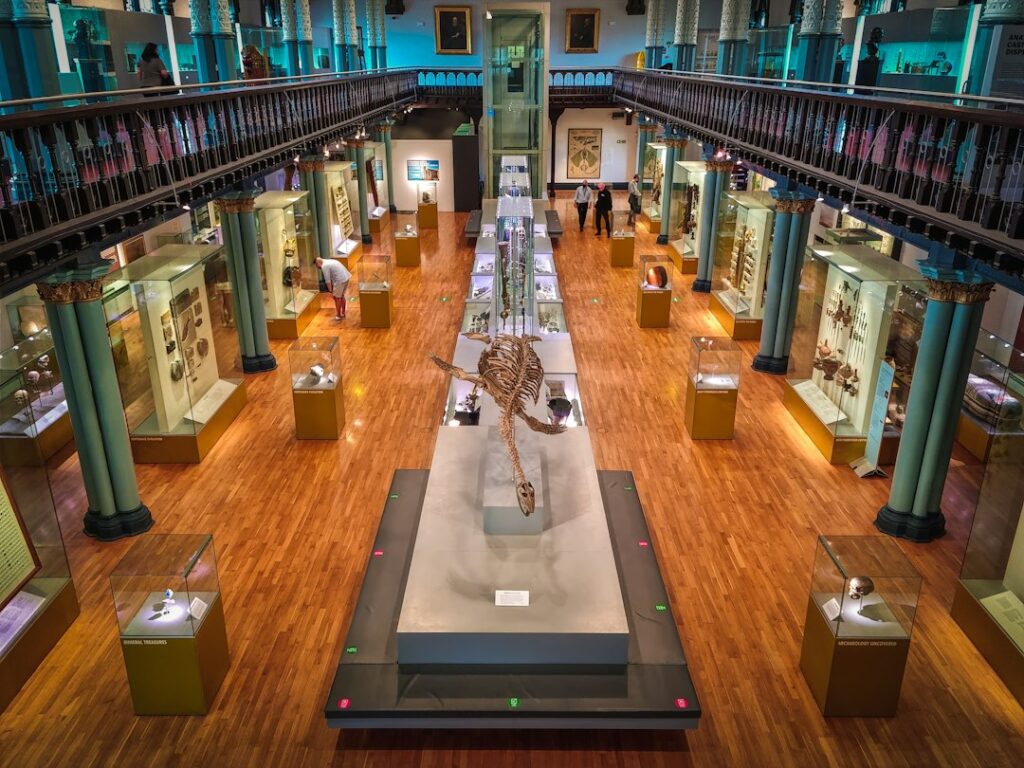
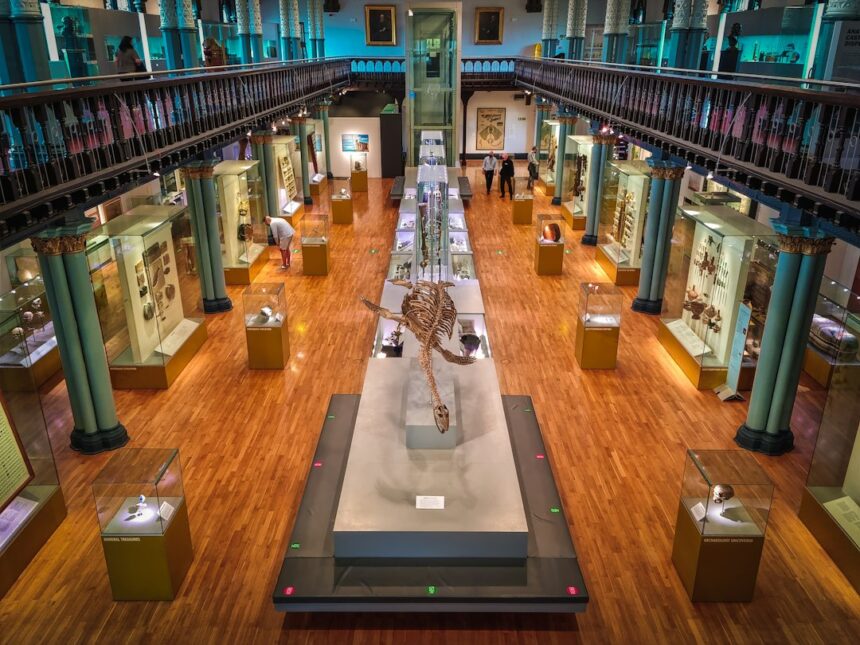
The foundation of any academic collection lies in its curation and provenance. Unlike civic institutions that often focus primarily on aesthetic masterpieces or local history, university collections are usually built through centuries of research expeditions, scholarly bequests, and departmental acquisitions. This heritage means the holdings are often sprawling, specialized, and deeply tied to the history of academic disciplines themselves. A collection of zoological specimens or ancient coins is not gathered to please a weekend crowd. It is assembled because each specimen or coin represents a primary data source for ongoing investigation.
Managing these collections requires a delicate balance between preservation and access. Conservation standards must be exceptionally high to protect delicate materials for future scientific and historical study. At the same time, keeping objects locked away in climate-controlled vaults defeats the educational mandate of a modern institution. This tension forces curators to think carefully about how physical items are stored, cataloged, and brought into circulation. Every catalog entry and digital scan adds another layer of utility, ensuring that physical objects remain useful for inquiry.
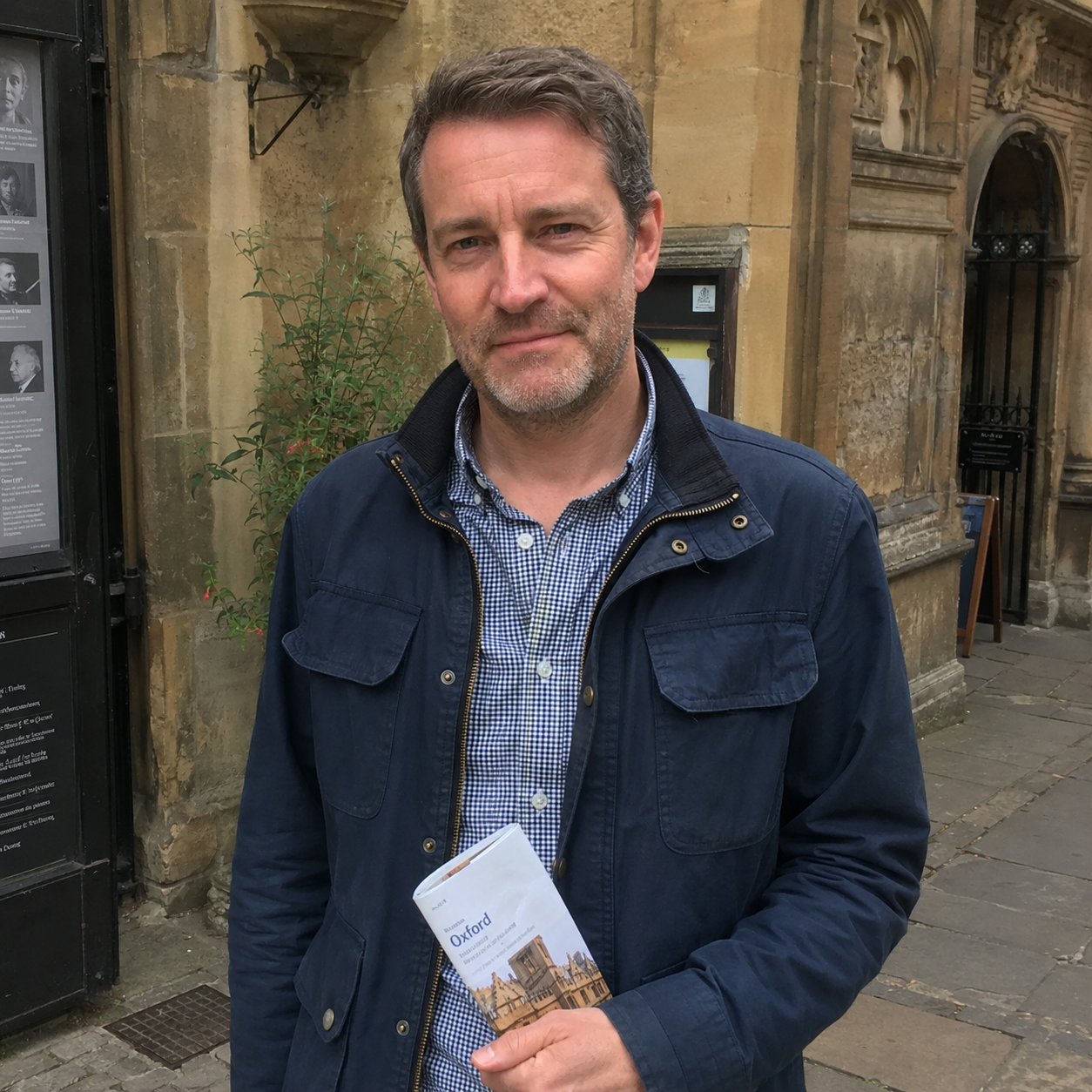
When institutions coordinate their resources, this utility expands significantly. The integration seen across networks such as the University of Oxford Gardens, Libraries and Museums network demonstrates how diverse collections can collectively support broad public learning and advanced research. By aligning botanical gardens, rare libraries, and specialized museums under shared operational goals, universities allow researchers to cross disciplinary boundaries with ease. A single project might draw upon botanical archives, archaeological finds, and rare manuscripts, proving that these institutions thrive when their collections are treated as an interconnected ecosystem rather than isolated display cases.
Teaching Through Material Evidence
Inside the seminar room, university museums offer a pedagogical method that text and digital screens cannot replicate. Handling physical objects requires students to slow down and observe closely. They must notice tool marks, material degradation, weight, and subtle variations in form. This tactile engagement transforms passive learners into active investigators. When students examine primary evidence directly, they learn to construct arguments based on physical observation rather than secondary interpretations found in textbooks.
This approach to learning extends far beyond art history and archaeology. Faculty members across disciplines regularly bring classes into museum galleries to test abstract theories against concrete reality. A business student might analyze historical trade tokens to understand early economic exchange systems, while a literature student might study period bindings to grasp the economics of seventeenth-century print culture. The physical object acts as a common anchor, allowing students from different degree programmes to debate shared historical problems using tangible evidence.
Museums provide an environment where structured inquiry replaces rote memorization. Students learn by asking specific questions:
- What does the wear pattern on this tool reveal about how it was held?
- How do material choices reflect the technological limitations of a specific era?
- In what ways does the current display context alter our perception of the object’s original function?
These questions encourage critical thinking that serves students well beyond the university walls. They learn to evaluate claims by looking closely at evidence, a skill central to science literacy and modern civic discourse alike.
Research Laboratories in Disguise
Beyond undergraduate teaching, university museums serve as active sites of cutting-edge research. Conservators, curators, and visiting scholars use advanced imaging, spectroscopic analysis, and material science techniques to uncover hidden histories within familiar objects. A painted panel might undergo infrared reflectography to reveal the artist’s underdrawing, exposing second thoughts and compositional changes that alter our understanding of the creative process. A fossil fragment might be CT-scanned to map internal structures without damaging the fragile matrix.
This research function means collections are constantly being re-evaluated. An object that sat in a drawer for fifty years as an unidentified specimen might suddenly become the centerpiece of a genomics study or a material science paper. The museum acts as a permanent archive for data that future generations of scholars will decode using tools we have not yet invented. This ongoing process of discovery separates university museums from static heritage sites. They are places where knowledge is not only stored, but actively produced.
Collaboration is central to this research model. Scientists, historians, anthropologists, and digital humanists regularly pool their expertise to interpret complex artifacts. A piece of ancient glass might be analyzed for its chemical composition by a chemist, dated by an archaeologist, and contextualized within trade routes by an economic historian. This multidisciplinary exchange enriches academic publishing and ensures that museum collections remain at the forefront of contemporary scholarship.
Public Interpretation and Civic Engagement
Making specialized academic research accessible to the general public is one of the most demanding tasks university museums face. Curators must translate complex scholarly debates into exhibitions that are engaging, clear, and welcoming to visitors who have no formal background in the subject matter. This translation process requires careful storytelling. It is not about dumbing down research, but about finding the human stakes within specialized inquiry.
Exhibitions should invite visitors to share in the process of discovery rather than simply presenting final conclusions. When label text explains how a researcher arrived at a specific date or attribution, it demystifies the scientific and historical method. Visitors see that knowledge is provisional, contested, and built through patient investigation. This transparency helps build public trust in academic institutions and fosters a deeper appreciation for the role of research in daily life.
University museums also serve as vital public squares for local communities. They host lectures, workshops, and collaborative projects that bring campus researchers into direct dialogue with city residents. By opening their doors wide, universities demonstrate that their intellectual resources belong to the wider community. Returning to our starting point, the mid-seventeenth-century astrolabe demonstrates this institutional versatility. To the researcher, it is a data point. To the student, it is a lesson in historical method. To the visitor, it is a prompt for wonder. In each case, the object retains its physical form while its meaning continually expands through use.