





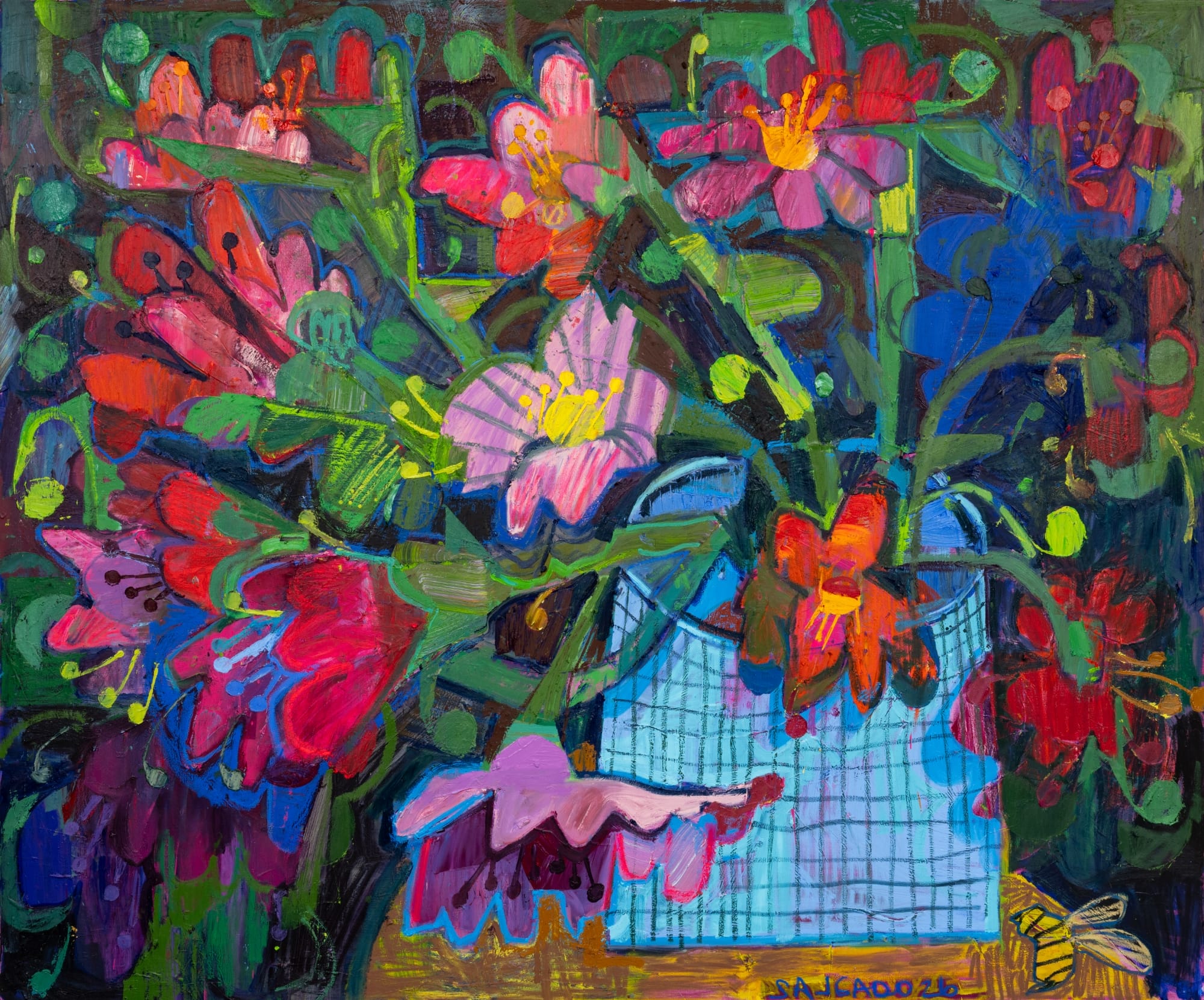
There is a distinct, rhythmic vitality to the latest series by artist Andrew Salgado. Moving away from the figurative focus that has defined much of his career, Salgado has turned his attention to the genre of the still life, imbuing the traditional study of florals with a restless, modern energy. Through his lens, a simple bouquet becomes a stage for complex emotional exploration, capturing flowers not just in their pristine prime, but in the compelling, messy process of decay.
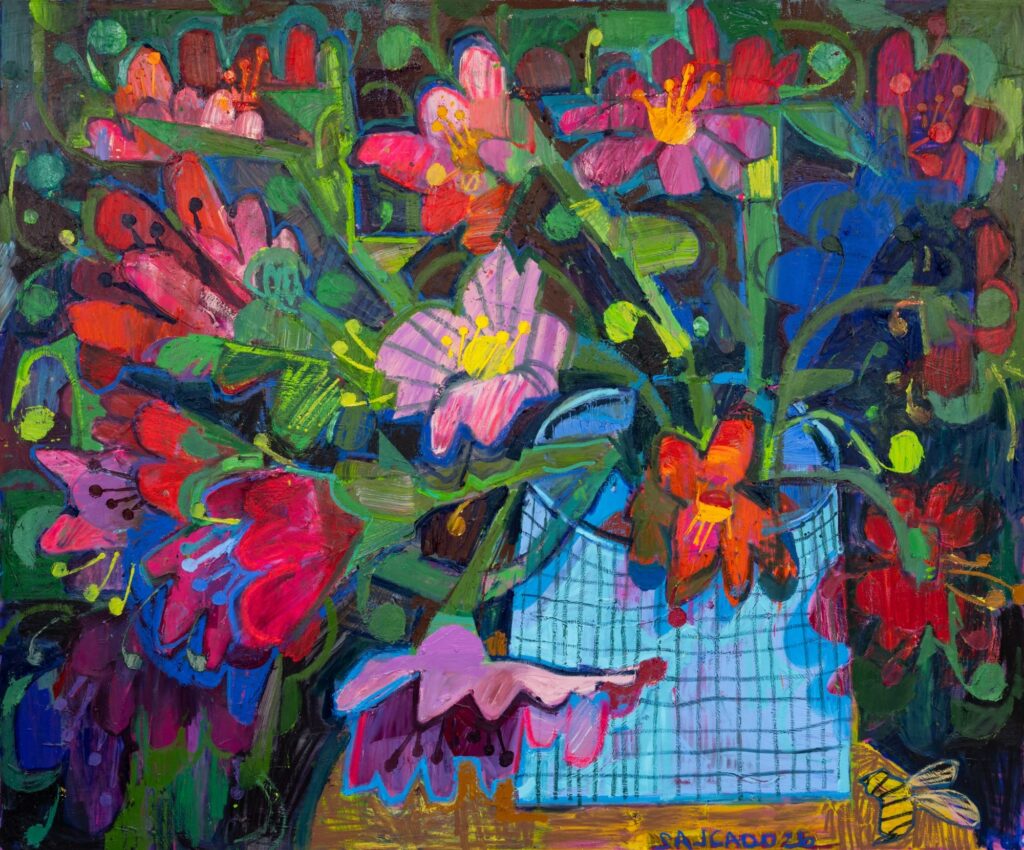
Salgado’s canvases are defined by an aggressive application of paint and a fearless use of colour. Rather than aiming for botanical accuracy, he employs gestural brushwork that seems to vibrate against the surface of the canvas. The petals appear to ripple, suggesting movement in what is traditionally a static subject. This approach transforms the act of observing nature into an exercise in psychological presence, much like the emotive, intimate art works that seek to process human experience through form and tone.
Reframing the Still Life
The history of the still life is often associated with domesticity and quiet observation. However, Salgado disrupts this lineage by introducing a sense of urgency. His flowers feel feral and overgrown, pushing against the boundaries of the frame. The juxtaposition of bright, synthetic-feeling hues with the organic forms of wilting blooms creates a tension that is both beautiful and slightly melancholic.
For those who frequent Oxford art galleries, Salgado’s work serves as a reminder of how contemporary painting continues to revitalise historical genres. He manages to strip away the dust of the traditional “floral arrangement” and replace it with a visceral, tactile reality that feels entirely current.
By focusing on the lifecycle of the flower, the artist invites the viewer to reflect on impermanence. It is a series that captures the fleeting nature of beauty, rendered in paint that is thick, textured, and unapologetically alive. Whether one views these as literal floral portraits or as abstractions of growth and decline, the pulse of Salgado’s technique ensures that they remain impossible to ignore.