



Art criticism often provokes an immediate, defensive hesitation among casual gallery-goers, raising a lingering question about why people so frequently distrust the very voices dedicated to explaining creative expression. When a painting, a sculpture, or a performance piece enters the public sphere, it carries an inherent vulnerability, inviting anyone who passes by to feel, react, and wonder. Yet, hovering just behind this open invitation is a quiet anxiety that an authorized critic will step forward with a clipboard, an inaccessible vocabulary, and a definitive ruling on what the piece is supposed to mean. This perceived gatekeeping creates an invisible wall between the viewer and the canvas, transforming what should be a spontaneous encounter into a test of cultural literacy. People worry that their immediate emotional response—a sudden surge of warmth, a profound indifference, or a confusing wave of nostalgia—might be wrong simply because it does not align with the consensus found in cultural journals or academic reviews. The critic, in the popular imagination, risks becoming an intellectual customs officer inspecting artistic passports, checking whether a viewer’s feelings are sufficiently refined to enter the kingdom of high culture. This widespread skepticism is not entirely unfounded, for the history of criticism is littered with moments of elitism, dogmatic certainty, and an exclusionary jargon that seems deliberately designed to make ordinary people feel unequipped for aesthetic contemplation. However, reducing the critical tradition to mere institutional policing overlooks its deeper, more generous potential. When practiced with humility and grace, criticism is not an act of verdict-passing or grading; it is an invitation to look more closely, to linger a little longer in front of an ambiguous surface, and to participate in a centuries-long conversation about what it means to be human in a visually saturated world. It models a way of paying attention that honors the complexity of art without demanding that every mystery be instantly solved or neatly categorized.
The Disciplined Art of Paying Close Attention
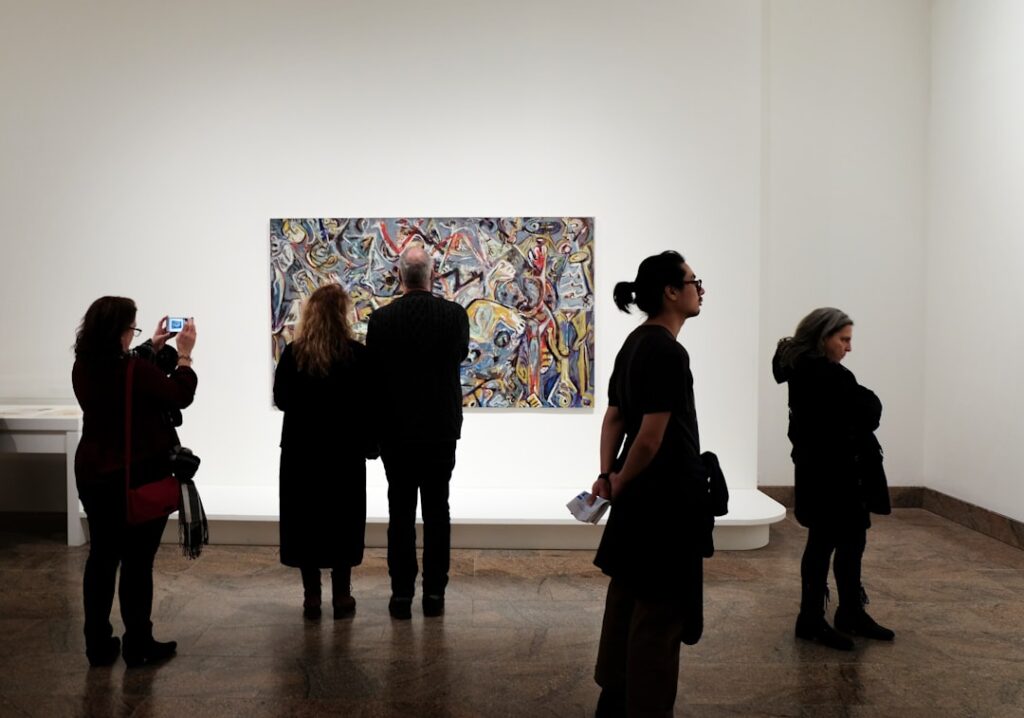
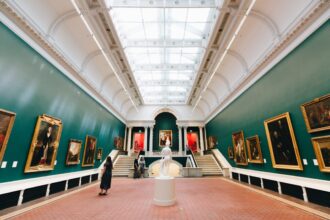
At its core, the most enduring form of art criticism is nothing more and nothing less than an exercise in sustained attention. In a contemporary culture dominated by fractured concentration and the relentless skimming of digital feeds, the simple act of standing before a physical object for twenty minutes feels radical, almost rebellious. A thoughtful critic does not arrive at an exhibition with a fully formed thesis ready to be slapped onto the walls; rather, they arrive in a state of deliberate receptivity, willing to let the artwork disrupt their assumptions and reorganize their senses. This mode of deep observation mirrors the broader intellectual curiosity nurtured within university towns and historic cultural centers, where exploring best museums in Oxford for curious visitors has long been considered a fundamental component of a reflective life. When we watch a skilled writer engage with a painting, we are witnessing a masterclass in seeing. They notice the subtle buildup of pigment in the shadowed corner of a canvas, the hesitant curve of a charcoal line, or the jarring juxtaposition of color that initially seems like a mistake but gradually reveals itself as the emotional core of the piece. This kind of attention requires patience, a quality that is increasingly scarce in modern media environments. The critic demonstrates that meaning is rarely found on the surface of a work; it must be coaxed out through quiet dedication and an ongoing dialogue between the viewer’s memory and the artist’s deliberate choices. By slowing down the encounter, criticism acts as a corrective to our modern impatience, teaching us how to look past our first impressions and discover layers of texture, history, and feeling that would otherwise remain invisible. It is an acknowledgment that understanding art is not a passive consumption of beauty, but an active, participatory labor of the gaze.
Interpretation as an Open-Ended Conversation
Beyond mere observation, criticism thrives as an ongoing dialogue, a living conversation that refuses to settle on a single, authorized interpretation. Imagine two visitors standing side by side in a sunlit gallery, looking at the exact same abstract canvas. For the first viewer, the swirling strokes of dark blue and muted ochre evoke the suffocating weight of an overcast afternoon spent wandering through ancient cobblestone streets, bringing to mind the rich atmosphere captured by local oxford art galleries and the city’s creative life where contemporary visions converse with historical ghosts. For the second viewer, those exact same brushstrokes suggest something entirely different—the chaotic energy of a crowded railway station at midnight, humming with anonymity and the silent drama of transient lives. Neither viewer is wrong, and neither has unlocked the hidden code that the artist secretly embedded in the paint. Instead, both are engaging in the vital work of interpretation, using the artwork as a mirror for their own internal landscapes and lived experiences. The critic enters this shared space not to declare a winner between these two competing perspectives, but to orchestrate a richer dialogue between them. Good criticism accepts that a truly great work of art is a living organism capable of sustaining multiple, contradictory readings across time and geography. It recognizes that culture is forged in the friction between diverse viewpoints, rather than in the passive acceptance of a single critical decree. By treating interpretation as an open-ended dialogue rather than an academic exam, the critic validates the viewer’s personal connection to the work while simultaneously expanding the boundaries of what that work can be said to mean. This approach transforms the gallery from a silent, intimidating temple into a vibrant public forum where thoughts can be tested, shared, and reframed without the fear of intellectual inadequacy.
Reclaiming Public Imagination Through Shared Wonder
Reclaiming the cultural space of art criticism requires shifting our collective perspective away from the language of authority and toward the cultivation of shared wonder. When criticism becomes overly technical or defensive, it alienates the very public it ought to inspire, turning art into a specialized asset for the privileged few rather than a common inheritance for everyone. Yet, when it is practiced with generosity, curiosity, and an open heart, the act of writing about art can serve as a bridge across the divides of modern life. It reminds us that our private emotional responses to a sculpture, a photograph, or a theatrical performance are part of a larger communal fabric. The critic helps articulate the inarticulate, giving voice to those shadowy feelings of awe, melancholy, or delight that often escape our everyday vocabulary. In doing so, they do not diminish the mystery of the artwork; rather, they deepen it, leaving us with a renewed appreciation for how much we still have to learn from one another. This ongoing exchange matters profoundly in a world that constantly pushes us toward certainty, polarization, and rapid simplification. Art, and the sensitive criticism that surrounds it, offers a sanctuary for ambiguity, reminding us that it is entirely possible to look at the same object, see something entirely different from our neighbor, and still find common ground in the shared experience of looking and wondering together.