





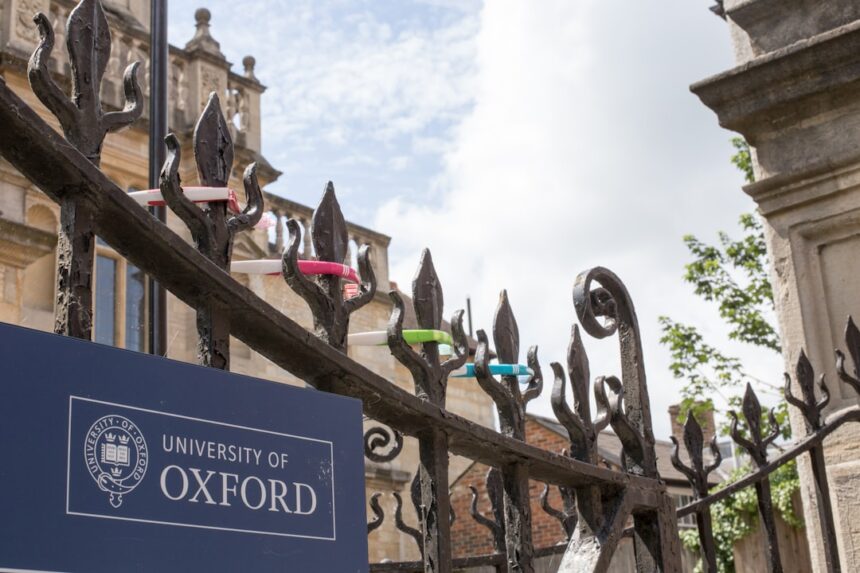
Oxford Ideas Festival represents a significant intersection between traditional academic enquiry and the necessity for accessible, public-facing dialogue. In a city where the weight of history is often physically manifest in the stone of its spires and the silence of its libraries, the introduction of a festival dedicated to the exchange of ideas serves as a bridge. It invites the broader community to participate in the kind of rigorous, thoughtful reflection that is frequently confined to seminar rooms or specialized journals. By providing a stage for public debate, the festival transforms the scholarly nature of the city into something more fluid, collaborative, and relevant to the contemporary experience.
The success of such an initiative lies in its ability to strip away the barriers of exclusivity. Modern intellectual life often suffers from fragmentation, where expertise remains siloed within institutions. When we consider how public lectures Oxford and similar forums operate, we see a clear desire for a shared space where local residents, students, and curious visitors can engage with complex topics. The festival structure allows for a cross-pollination of disciplines, where the barriers between science, the arts, and social policy are intentionally lowered to encourage a more holistic understanding of our current moment.
Public conversation is inherently fragile. It requires not just the transmission of information, but the cultivation of active listening and intellectual humility. In an age characterized by digital echo chambers, the physical presence of a festival environment acts as a corrective. When speakers and audiences occupy the same room, the nuances of tone, hesitation, and collaborative thought become visible. This is the essence of democratic debate: the understanding that our perspective is one of many and that truth is often found through the friction of competing, yet civil, viewpoints.
The thematic range of such festivals typically reflects the polymathic nature of the city itself. One might find sessions exploring the intersection of philosophy in everyday life alongside inquiries into global sustainability or advancements in artificial intelligence. This variety ensures that the festival does not simply serve as a platform for experts to lecture the public, but as a laboratory for ideas where the audience’s questions often steer the discourse into unexpected, enlightening territories. It is in these spontaneous moments—a well-placed question from the floor or a sudden pivot in a panel discussion—that the festival truly fulfills its purpose.
Reflecting on the architecture of these public spaces, one must consider the role of the environment in shaping discourse. Oxford provides a unique backdrop for such gatherings. Whether hosted in historic halls or more contemporary community venues, the setting influences the tone of the conversation. The historical weight of the city encourages a long-term view of problems, urging participants to consider how current challenges align with historical precedents. This sense of continuity is vital; it prevents the discourse from becoming purely reactive, encouraging instead a deeper consideration of the long-term implications of our societal choices.
Furthermore, the festival encourages a mode of creative thinking and modern intellectual life that moves beyond binary arguments. Instead of seeking definitive answers to complex problems, these gatherings often excel at defining the right questions. By focusing on the inquiry rather than the conclusion, participants are invited to tolerate ambiguity—a necessary skill in our rapidly shifting global landscape. This process of questioning strengthens the community, as it fosters a shared commitment to critical analysis rather than ideological rigidity.
As the festival progresses each year, it highlights the enduring necessity of the public square. Technology has expanded our reach, but it has not replaced the value of the shared physical experience. We find that when we gather to discuss, debate, and occasionally disagree, we affirm the strength of our local community. The festival acts as a reminder that intellectual vitality is a renewable resource, one that is replenished whenever individuals come together to share their curiosity, their insights, and their willingness to learn from one another.
Ultimately, the value of the festival is not just in the specific topics covered, but in the precedent it sets for the future of public engagement in the city. It establishes a culture where intellectual curiosity is celebrated as a communal asset. By keeping the doors open to diverse voices and perspectives, Oxford ensures that the life of the mind remains a vibrant, participatory experience. It is a testament to the belief that the most profound insights are not kept under lock and key, but are instead generated through the steady, careful work of public conversation.
References
Oxford Social Archive. (n.d.). Public Lectures Oxford and Everyday Ideas.
Oxford Social Archive. (n.d.). Philosophy in Everyday Life and Modern Thinking.
Oxford Social Archive. (n.d.). Creative Thinking and Modern Intellectual Life.