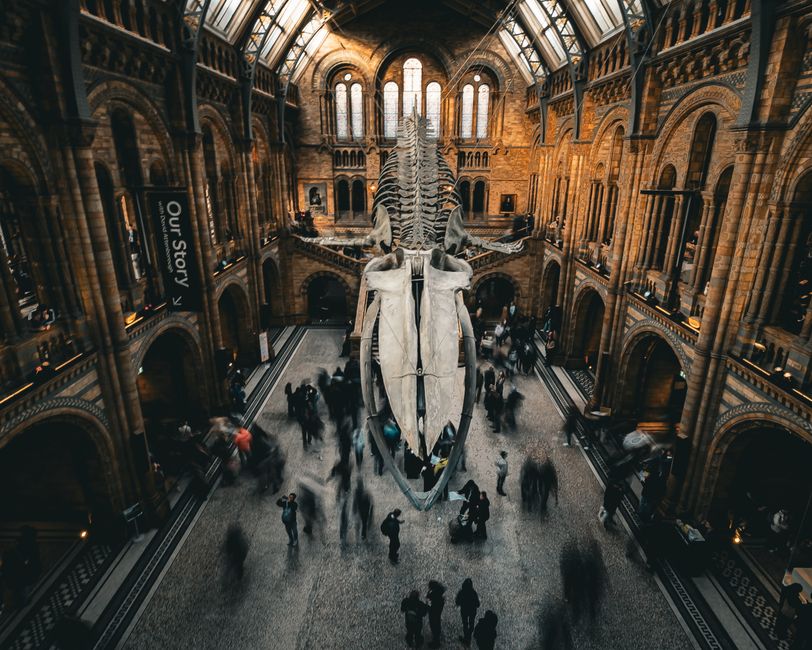






Science Museums Oxford play a fundamental role in how the city bridges the gap between high-level academic research and the inquisitive nature of the general public. As a city steeped in the history of discovery, Oxford offers unique opportunities for residents and visitors to engage with material culture that has shaped our understanding of physics, biology, and natural history. These institutions are not merely repositories for old specimens or dormant instruments; they are active sites of inquiry where the evolution of thought is displayed for all to see.

The relationship between scholarly research and the layperson is often mediated by the accessibility of museum collections. When we walk through the corridors of these institutions, we are observing the physical manifestations of complex theoretical work. By presenting research in a tactile, visual environment, museums transform abstract concepts into tangible lessons. This approach is essential for maintaining a healthy science communication framework within the city. Without this connection, academic findings risk remaining siloed within the ivory towers of the colleges, unreachable to the very community that supports their pursuit.
The history of scientific enquiry in Oxford is inextricably linked to the preservation of its tools and findings. For instance, the collections held within the city’s specialized museums often mirror the progression of methodologies that were once revolutionary. When a researcher studies the history of early anatomical study or the development of mathematical instruments, they are tracing the lineage of human curiosity. Curators at these institutions face the constant challenge of maintaining this historical integrity while ensuring that the exhibits remain relevant to contemporary audiences. This requires a nuanced understanding of how to present complex data without stripping away the nuance that makes science so compelling.
One of the most engaging aspects of visiting these spaces is the realization that science is an iterative process. It is rarely a static collection of facts. This is particularly evident in natural history collections, where even a single misplaced item can spark a conversation about archival challenges and the importance of precise categorization. Much like the story behind megalodon shark vertebrae, the narrative of what is found, lost, or rediscovered highlights the human element in scientific work. Museums provide a safe space to explore these errors and successes, framing them as essential components of the broader intellectual journey.
The pedagogical value of these spaces extends beyond the university curriculum. For local school groups and lifelong learners, Oxford’s science museums act as laboratories for public engagement. They encourage visitors to question the world around them, prompting discussions about modern challenges, from environmental shifts to the psychological underpinnings of behavior. In an era where information is abundant but often context-poor, the museum provides a curated, verified environment for learning. This reliability is vital for fostering a society that values evidence-based thinking, even when faced with topics that hit close to home, such as understanding how environmental patterns affect global stability or how personal histories influence our current social connections.
Public learning in Oxford is heavily influenced by the presence of these institutions. They serve as neutral grounds where interdisciplinary discussions can thrive. A physicist and a historian might find common ground while observing the same 17th-century instrument, sparking a dialogue that transcends their individual fields. This interdisciplinary potential is one of the city’s greatest assets. When museums curate exhibitions that highlight these connections, they effectively democratize knowledge, allowing it to move fluidly between researchers, students, and curious residents.
Moreover, the curation of these spaces reflects broader trends in how we perceive science. Modern exhibit design emphasizes interaction and narrative, moving away from the Victorian-era practice of stacking glass cases with little context. Today’s visitor is expected to participate in the discovery process, utilizing digital tools, tactile replicas, and carefully crafted explanations to grasp the significance of the objects on display. This evolution has made science more accessible to diverse audiences, regardless of their academic background. The focus is no longer solely on the prestige of the discovery, but on the impact that discovery has on the collective human story.
However, the maintenance of such institutions is a perpetual labor. Preserving delicate artifacts requires specialized knowledge, and funding these endeavors is a constant concern for university administrators and public bodies alike. The challenge lies in keeping these spaces open and vibrant without compromising the scholarly rigor that defines them. Each exhibition is a carefully calibrated balance of entertainment and education, designed to inspire the next generation of researchers while satisfying the intellectual curiosity of the wider population.
As we look toward the future, the integration of digital technology with physical museum spaces promises to further expand the reach of these collections. Online archives and virtual tours offer a glimpse into the vast, often unseen, storage areas of the city’s collections, allowing for a deeper exploration of items that might not make it into the main gallery spaces. This digital expansion does not replace the physical experience of walking through an Oxford museum, but it complements it, creating a multi-layered learning environment that is well-suited for the modern age. Through these efforts, Oxford continues to sustain its reputation as a hub of intellectual life, ensuring that its scientific heritage remains a living, breathing part of the public consciousness for years to come.
References:
University of Oxford Museum Collections Overview, 2023.
Public Engagement in Academic Institutions: A Historical Review, Oxford University Press, 2022.
Science Communication and Public Understanding, Oxford Social Archive.
Curatorial Practices in University Museums: Challenges and Opportunities, Journal of Museum Studies, 2021.