




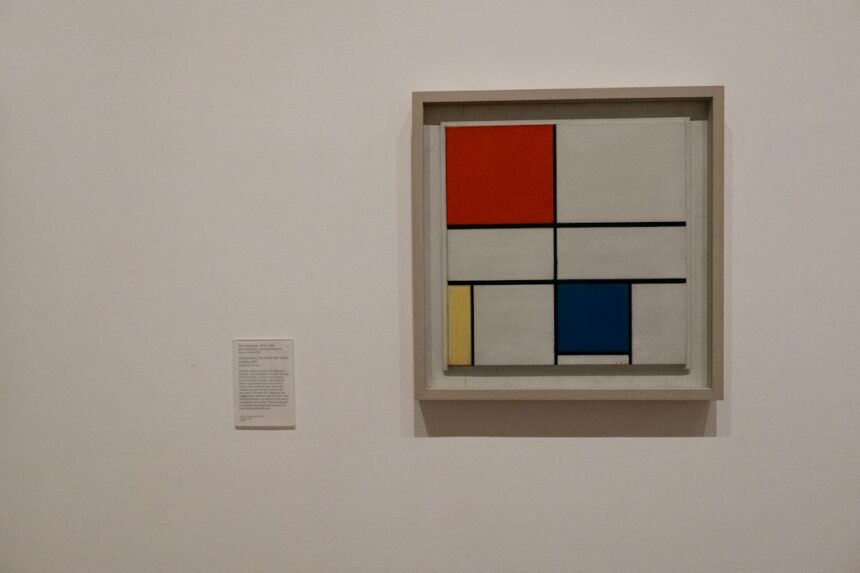
Modern art meaning is often searched by museum visitors who find themselves standing quietly in front of a strange canvas, a stack of felt, or an arrangement of industrial pipes, wondering if they are missing an invisible punchline. We have all experienced that sudden spike of self-consciousness in a gallery. You look up at a wall, check the small white label for a guiding sentence, and find only three painted boards, a stray wire, and a title that feels deliberately unhelpful. A quiet voice in your head asks whether this is profound creative genius or a practical joke at the public’s expense. That mild anxiety is entirely normal. Galleries can feel like testing grounds where you worry about failing an unspoken exam.
The traditional urge is to look for a hidden code. Many viewers assume that every brushstroke, object, and color choice has a fixed translation, and that the artist has hidden a secret message that only trained historians can decode. When we cannot immediately translate what we see, frustration sets in. Yet modern and contemporary works rarely function like road signs pointing toward a single destination. Instead, they act more like open questions. Approaching them requires letting go of the demand for instant clarity and allowing visual experiences to unfold at their own pace.
The Shift from Copying to Questioning
For centuries, the primary measure of visual skill was imitation. Painters and sculptors demonstrated mastery by reproducing the physical world with startling accuracy, capturing the drape of silk, the play of light on water, or the exact flush of a human cheek. When photography arrived in the nineteenth century, it took over the task of mechanical recording. Artists were suddenly liberated from the burden of visual documentation. They did not need to spend months meticulously blending oil paint to mimic a landscape when a camera could capture it in a fraction of a second.
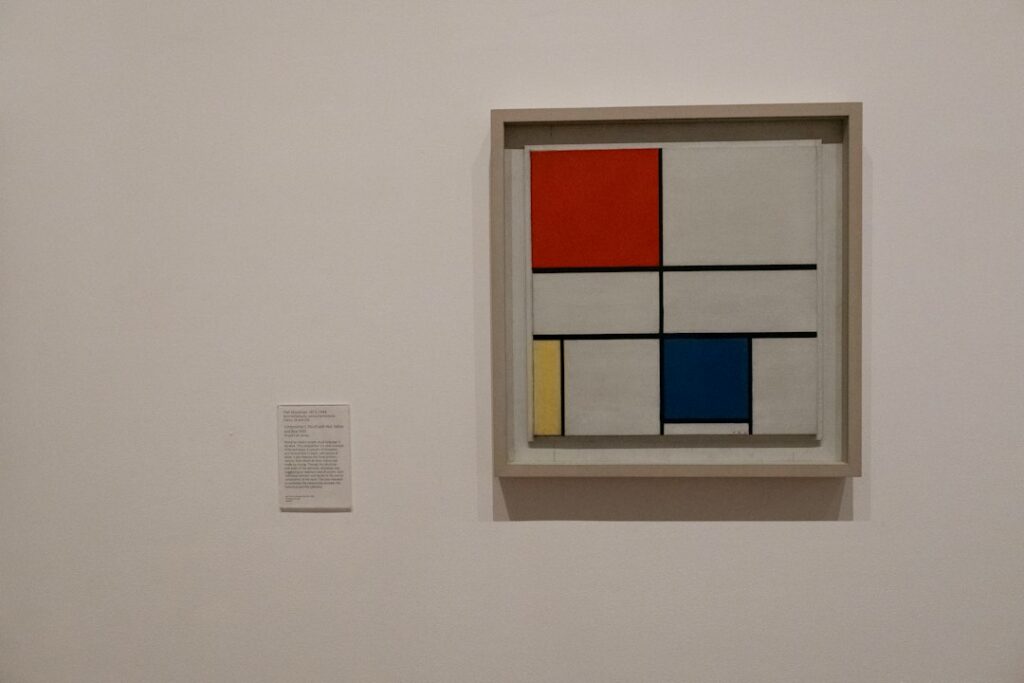
This technological shift forced a radical reassessment of what painting and sculpture could actually achieve. Creators began to examine the raw materials of their craft itself. They asked what happened when paint was applied thickly without blending, when shapes were flattened into primary colors, or when everyday manufactured objects were lifted out of factories and placed inside exhibition halls. A canvas stopped being a window looking out onto a pastoral scene and became an object in its own right—a physical surface holding pigment, texture, and tension. Understanding art criticism and the public imagination helps clarify why these institutional shifts often left traditional audiences baffled by the sudden departure from recognizable forms.
Meeting a Hypothetical Work on Its Own Terms
Imagine walking into a quiet gallery room and encountering a large, unprimed canvas featuring a heavy, jagged swipe of charcoal grey paint intersecting a thin, vertical neon yellow line. There is no explanatory plaque besides the artist’s name and a cryptic title. Most people look at this arrangement for five seconds, decide they do not understand it, and walk briskly toward the exit. But if you linger for a full minute, your perception begins to shift. You notice how the grey pigment pools heavily at the bottom edge, revealing the physical weight and viscosity of the paint. You see how the bright yellow line cuts across the muted background, creating an optical vibration that makes your eyes adjust.
This type of viewing does not ask you to figure out what the artist had for breakfast or what specific geopolitical crisis inspired the composition. It invites you to track your own physiological and psychological reactions. Does the stark contrast feel jarring or grounding? Does the empty space around the marks feel expansive or claustrophobic? By shifting focus from what a piece represents to what it physically presents, you bypass the intimidation barrier entirely. You are no longer trying to solve a riddle; you are simply observing how materials interact in a shared space.
Letting Go of Instant Translation
One of the most persistent hurdles in art appreciation is the desire for immediate legibility. We live in an era of rapid information retrieval, where definitions, summaries, and instant answers are always at our fingertips. When we encounter something that resists quick summarization, our instinct is to dismiss it as pretentious or meaningless. However, enduring visual works often derive their power from withholding easy resolution. They linger in the mind precisely because they refuse to be tidied up into a neat sentence.
If you encounter unfamiliar terminology on a gallery wall or in a catalogue essay, you can easily look up unfamiliar concepts using resources like Tate’s Art Terms to understand historical movements and techniques. Yet knowing the definition of minimalism or abstract expressionism is only a starting tool. Definitions do not replace the physical encounter with a surface. True engagement happens when you allow a piece to remain somewhat mysterious, accepting that a work of art can pose an effective question without offering a comforting answer.
Finding Your Own Path Through the Gallery
Navigating public exhibitions becomes far more rewarding when you stop treating them as educational lectures and start treating them as spaces for quiet contemplation. You do not need to love every piece on display, nor do you need to read every single wall text. In fact, ignoring the wall texts for the first few minutes often allows your eyes to form an independent relationship with the work before institutional narratives take over.
Galleries function as rare architectural spaces dedicated to unhurried attention. In a culture saturated with constant notifications and demands for productivity, standing silently before a challenging canvas is an act of quiet resistance. When you embrace ambiguity, viewing creative works transforms from an intimidating test of cultural literacy into a deeply personal, meditative practice.
Try This Next Time
- Pause in front of the first work that catches your eye and count silently to thirty before reading the label or looking for an explanation.
- Focus exclusively on materials and textures, asking yourself how the physical substances were applied, layered, or joined together.
- Notice your initial emotional reaction—whether it is boredom, confusion, or irritation—and gently ask yourself what specific visual element triggered that feeling.
References:
Tate. Art Terms. Available at: https://www.tate.org.uk/art/art-terms