



Oxford Morning Walks begin in the grey hours before the delivery vans idle at the corners and the first bicycle chains rattle against cold metal frames. The air holds a damp chill that clings to wool coats and rises off the flagstones near the central market. Street lamps still cast long, orange reflections across slick pavements, fighting a losing battle against the pale wash of dawn. There are no crowds yet, only the steady sweep of a municipal broom near a church entrance and the low hum of a refrigeration truck unloading milk crates. The city at this hour belongs to nobody in particular, sitting quietly in its own heavy atmosphere of stone and mortar.
The First Light on Stone
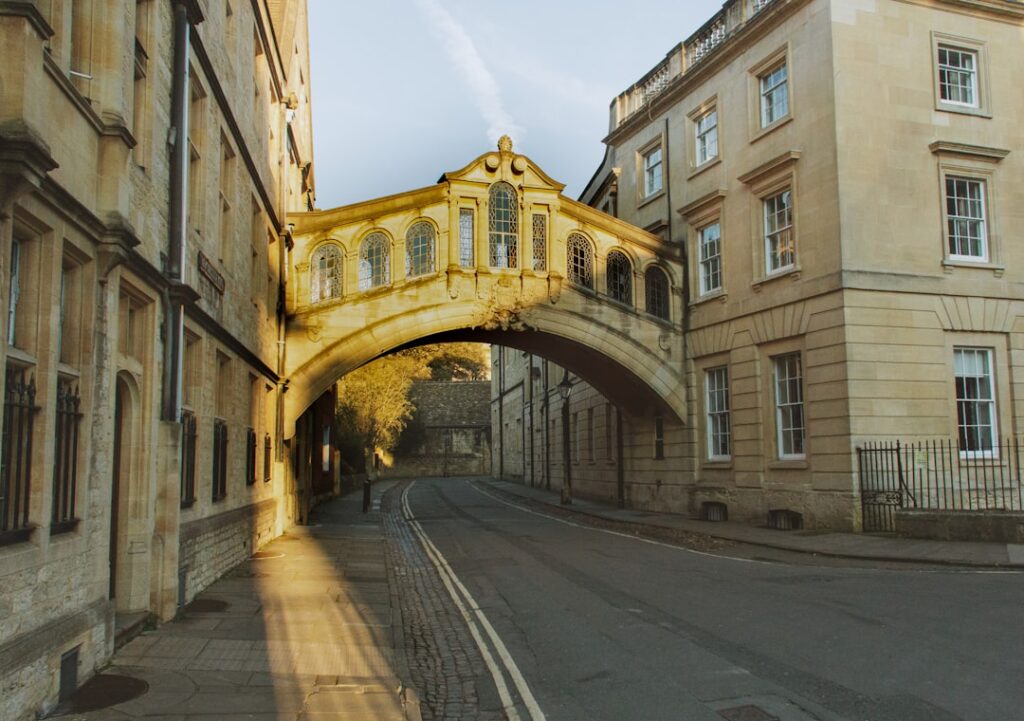
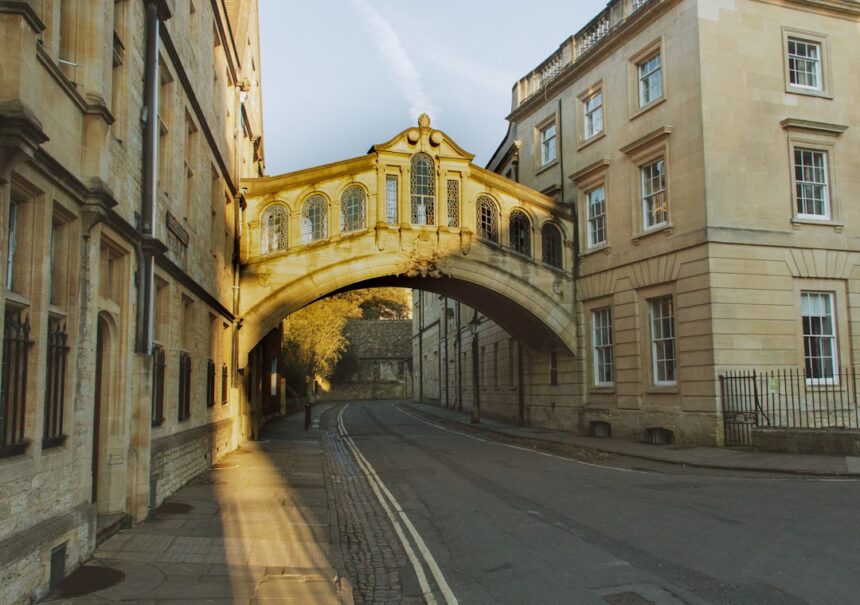
The sky above the rooflines shifts from charcoal to a bruised violet as the light catches the upper ledges of college walls. Porters’ lodges remain dark behind heavy oak doors, and the brass knockers catch the pale horizontal rays of the morning sun. This is the time to examine Oxford walking routes without dodging tourists or stepping aside for academic processions. The honey-coloured limestone looks almost yellow in the early glare, showing every weathered chisel mark and soot stain accumulated over centuries. A single pigeon picks its way across a high coping stone, its wings making a dry snapping sound against the quiet air.
Puddles left by an overnight drizzle mirror the iron railings and the pointed arches of quiet alleyways. The damp smell of wet earth and old mortar rises from enclosed courtyards where fallen leaves mat against iron gratings. Nothing moves quickly here. A stray cat slips behind a drainpipe and disappears into the shadows of a bin store. The city is simply waking up, shedding the heavy blanket of night in slow, measured increments.
The Shift in the Air
By six-thirty, the atmosphere alters subtly as the first shift workers and early joggers appear on the main thoroughfares. Footsteps echo sharply against the brick facades, distinct and solitary. A runner passes, breath pluming in grey puffs against the cold, their trainers slapping rhythmically on the tarmac. This transitional phase strips away the postcard stillness and reveals the working mechanics of a modern university town. People have places to be before the gates open.
A delivery van pulls up near a narrow lane, its hazard lights blinking an amber warning against the grey shopfronts. The driver hefts a heavy bundle of newspapers onto his shoulder and pushes through a heavy wooden door. Inside, the lights are already on, casting a yellow glow over stacked pastries and coffee grinders. The ordinary routines of commerce begin to thread through the quiet streets, replacing the solitary stillness of dawn with purposeful movement.
The Rattle of Bicycle Chains
The real sound of the morning arrives on two wheels. Commuters on upright town bikes come sweeping down the incline from the residential districts, tires hissing slightly on the damp road surface. Metal baskets rattle with briefcases and gym bags. Riders in high-visibility jackets navigate the roundabouts with practiced caution, signalling turns with brief, cold-reddened fingers. Cyclists share the asphalt with buses that rumble out of the depot, their diesel engines vibrating through the soles of shoes.
At the intersections, the tempo quickens. A cyclist waits at a red light, balancing one foot on the kerb while checking a phone screen tucked inside a handlebar mount. The traffic light turns, and the peloton surges forward in a coordinated blur of wool and waterproofs. These are regular people commuting to laboratories, offices, and libraries, treating the historic streets not as a museum exhibit, but as a daily commute.
The Scent of Roasting Coffee
The smell of burnt sugar and roasting coffee beans drifts out from a cellar vent near the indoor market, cutting through the damp morning exhaust. Inside the small independents and Oxford cafés, staff members are setting out ceramic mugs and wiping down stainless steel counters with damp cloths. The hiss of a steam wand releasing pressure breaks the street noise for a few seconds. A chalkboard sign is dragged out onto the pavement, listing flat whites and porridge specials in neat chalk script.
The first customers step inside out of the wind, shaking raindrops from their hoods and ordering without looking up at the menus. They stand by the counter, warming their hands against takeaway cups while they wait. This ritual of morning caffeine anchors the neighbourhood, offering a brief point of pause before the rush of emails and lectures takes over the day. The interior warmth contrasts sharply with the biting breeze outside.
The City Awakens Fully
By eight o’clock, the transformation is complete. Metal security shutters rattle upward along the commercial streets, and shopkeepers arrange displays of fresh fruit and magazines on outdoor stands. Students in backpacks stream out of lodging houses, deep in conversation about morning seminars and overdue essays. Delivery vans double-park briefly, blocking narrow lanes while drivers argue good-naturedly with ticket inspectors. The morning walk has reached its natural conclusion, swallowed by the busy, functional rhythm of ordinary city life.
Oxford is no longer an empty stage of stone and shadow. It is noisy, crowded, and entirely awake, humming with the energy of thousands of people moving at once. The brief window of quiet has closed, leaving behind only the steady pulse of the working day.